
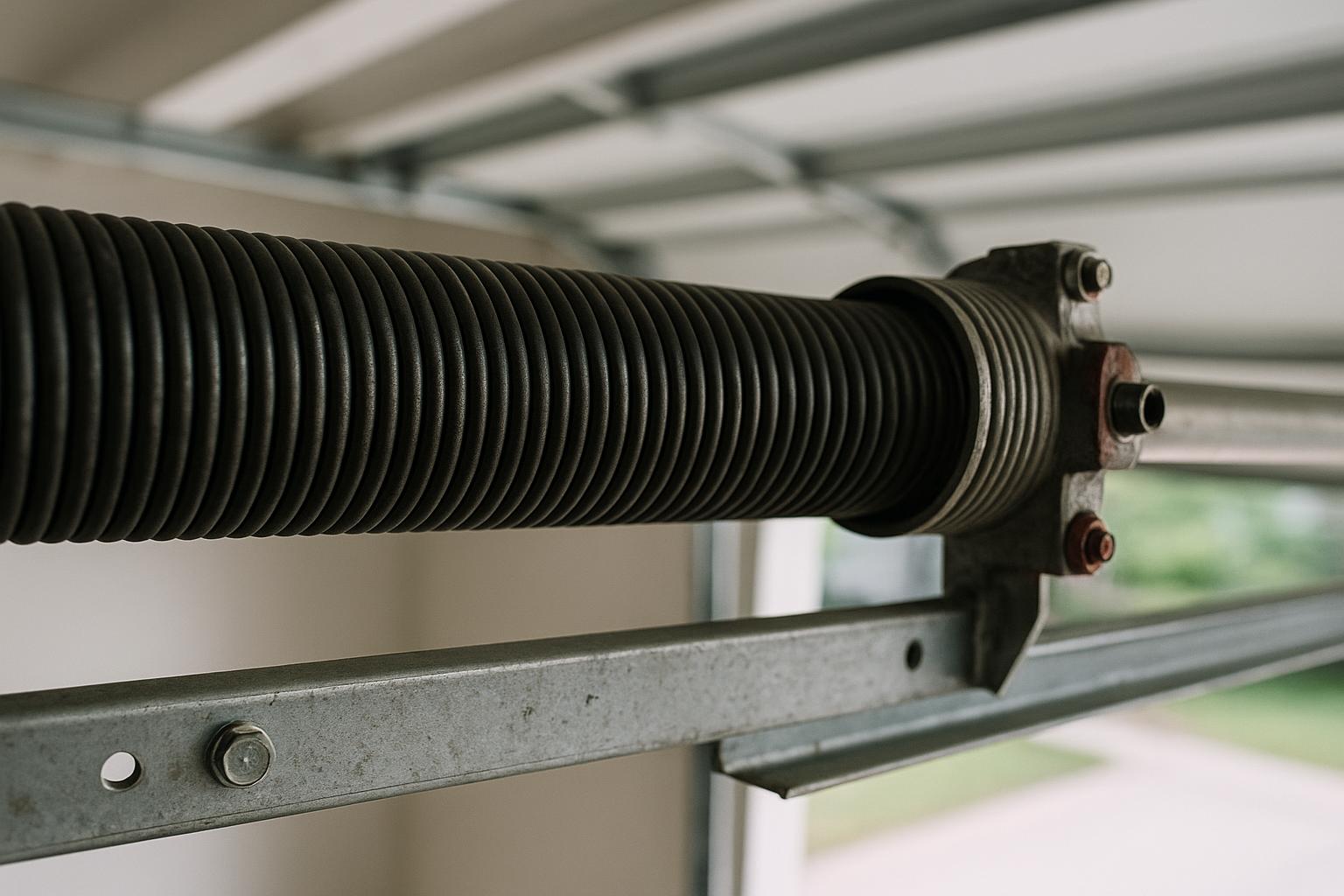
Your Garage Door Springs Are Doing More Work Than You Think
Most homeowners in Sarasota don't think about their garage door springs until something goes wrong. And when something goes wrong with a spring, it tends to go wrong in a big, loud, inconvenient way.
Your garage door springs are the real muscle behind the operation. They counterbalance the weight of the door — which can be anywhere from 130 to 400 pounds depending on the material and size — so your opener doesn't have to do all the heavy lifting. Without properly functioning springs, your garage door is essentially a giant, immovable wall.
The good news is that springs rarely fail without warning. If you know what to look for, you can catch the problem early and schedule a replacement on your terms instead of dealing with an emergency when you're trying to get to work on a Monday morning.
How Long Do Garage Door Springs Last?
Most standard garage door springs are rated for approximately 10,000 cycles. One cycle equals one full open and one full close. If you use your garage door four times a day — twice out, twice in — that's roughly seven years of life.
However, several factors can shorten or extend that lifespan:
- Humidity and salt air: Here in Sarasota, our coastal climate accelerates corrosion on metal components. Springs that might last a decade in a dry climate can wear out faster near the Gulf.
- Lack of maintenance: Springs that aren't lubricated regularly develop more friction, which increases wear.
- Door weight: Heavier doors made from wood or insulated steel put more stress on springs.
- Spring quality: Not all springs are created equal. Higher-cycle springs cost a bit more upfront but can last significantly longer.
The Two Types of Garage Door Springs
Before we get into the warning signs, it helps to know which type of springs your door uses.
Torsion Springs
These are mounted on a metal shaft directly above the garage door opening. They wind and unwind to raise and lower the door. Torsion springs are the more common type on modern residential doors and are generally considered safer and more durable.
Extension Springs
These run along the horizontal tracks on either side of the door. They stretch and contract to provide lifting force. Extension springs are more common on older or lighter doors. They should always have safety cables running through them to prevent a broken spring from becoming a projectile.
7 Warning Signs Your Garage Door Springs Are Failing
1. The Door Feels Heavier Than Usual
Try this simple test: disconnect your garage door opener by pulling the emergency release handle, then manually lift the door about halfway. A properly balanced door should stay in place on its own. If it feels extremely heavy or slams down the moment you let go, your springs are losing tension and can no longer support the door's weight.
2. The Door Opens Only a Few Inches, Then Stops
If your garage door opener struggles to lift the door more than six inches off the ground, the springs may have already broken. The opener motor isn't designed to lift the full weight of the door alone, so it hits its force limit and stops. This is actually a safety feature working as intended — the problem is the springs, not the opener.
3. You Heard a Loud Bang From the Garage
A snapping garage door spring sounds like a gunshot or a car backfiring. Many Sarasota homeowners tell us they heard a loud bang in the garage and thought someone had broken in. If you heard that noise and your door won't open, a spring almost certainly broke.
4. There's a Visible Gap in the Torsion Spring
Look at the spring mounted above your door. An intact torsion spring is a tightly wound coil with no gaps. A broken one will have a visible separation — usually a gap of one to two inches where the spring snapped apart. This is the most definitive visual confirmation.
5. The Door Looks Crooked When Opening or Closing
If your door has two extension springs and one breaks while the other is still functional, the door will tilt to one side during operation. This uneven movement puts stress on the tracks, rollers, and opener, and can cause additional damage if not addressed quickly.
6. The Cables Are Loose or Hanging
The lift cables on your garage door are kept taut by spring tension. When a spring breaks, the cables can come loose and may hang down or appear tangled around the drum at the top of the door. Loose cables are a clear sign of a spring problem.
7. You Notice Rust or Stretch Marks on the Springs
Corrosion weakens the metal and makes fractures more likely. Given the humidity levels we experience throughout the year in the Sarasota and Bradenton area, rust on springs is something we see frequently during service calls. Visible elongation or deformation of the coils is another sign that failure is imminent.
Why You Should Never Replace Garage Door Springs Yourself
We understand the DIY impulse. There are plenty of videos online showing how to replace garage door springs, and the parts themselves aren't terribly expensive. But this is one job where the risks genuinely outweigh the savings.
Torsion springs are under extreme tension. A spring that's improperly wound or suddenly released can cause serious injury or death. Extension springs under tension can also be dangerous without proper safety precautions and tools.
Professional technicians use specialized winding bars, clamps, and safety equipment to handle spring replacement safely. They also know how to properly calibrate the spring tension for your specific door weight, which is critical for balanced operation and opener longevity.
Should You Replace One Spring or Both?
If one spring has broken, we almost always recommend replacing both at the same time. Here's why:
- Both springs were installed at the same time, so the remaining spring has the same amount of wear and is likely close to failure itself.
- Replacing both ensures even tension and balanced door operation.
- The labor cost is the same whether we replace one or two, so you save on the second service call that would inevitably come a few months later.
This is especially true for torsion spring systems, where mismatched springs can cause uneven winding and premature wear on the new spring.
How Preventive Maintenance Extends Spring Life
Regular maintenance can add years to your springs' lifespan. At Precision Garage Door of Sarasota, our preventive maintenance service includes:
- Lubrication: We apply a silicone-based lubricant to the springs, reducing friction and slowing corrosion — especially important in our coastal environment.
- Balance testing: We check that the door is properly balanced so the springs aren't working harder than they need to.
- Visual inspection: We look for early signs of rust, wear, and deformation so we can flag potential problems before they turn into breakdowns.
- Hardware tightening: Loose brackets and bolts can shift the load on your springs, causing uneven wear.
We recommend scheduling a maintenance visit at least once a year. Homeowners in Lakewood Ranch, Venice, Siesta Key, and Osprey can all take advantage of this service.
Don't Wait for the Bang
A broken garage door spring is one of the most common service calls we handle, and it's almost always preventable with a little awareness and regular maintenance. If your door is feeling heavy, making unusual noises, or showing any of the warning signs above, don't ignore it.
Call Precision Garage Door of Sarasota to schedule an inspection. We'll assess your springs honestly, explain your options clearly, and get your door back to safe, reliable operation — before that loud bang catches you off guard.