
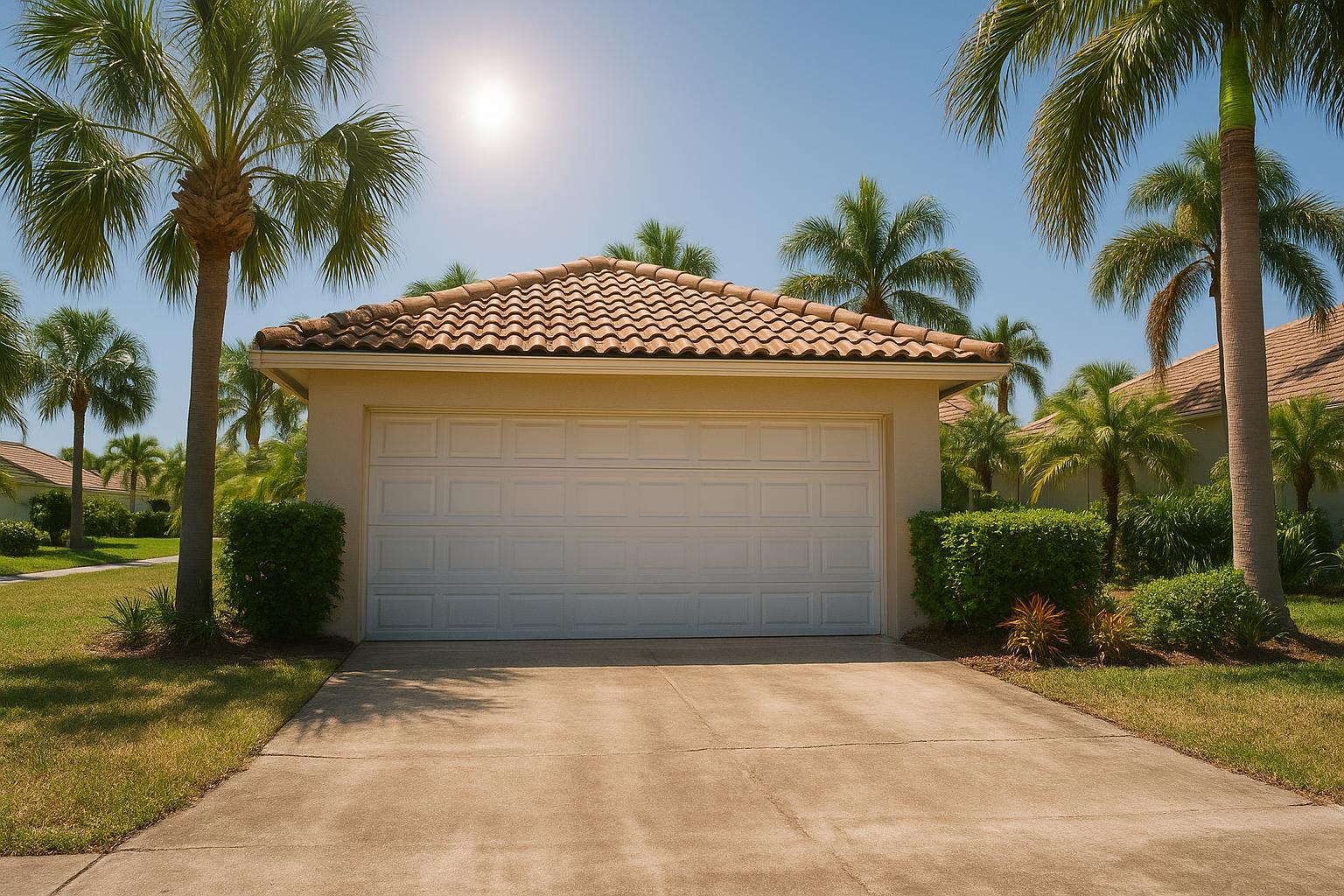
When the Florida Heat Fights Your Garage Door
Living in Sarasota means enjoying sunshine nearly year-round — but it also means dealing with temperatures that regularly climb into the 90s and humidity levels that can make everything feel ten degrees hotter. While most of us think about how the heat affects our air conditioning or our electric bills, few homeowners consider what those extreme temperatures are doing to their garage door.
If you've ever pressed your garage door opener on a sweltering afternoon and watched the door struggle, stall, or refuse to budge, you're not alone. Heat-related garage door problems are one of the most common service calls we handle during Sarasota's long summer months. Here's what's happening and what you can do about it.
How Heat Affects Your Garage Door System
Your garage door is a complex system of mechanical and electronic components, and several of them are sensitive to temperature extremes. Understanding how heat impacts each part can help you troubleshoot problems before they turn into emergencies.
Metal Expansion
Metal expands when it heats up — it's basic physics. Your garage door tracks, springs, and the door panels themselves are all made of metal, and when temperatures soar, these components expand slightly. In most cases, the expansion is minimal and doesn't cause issues. But if your tracks are already slightly misaligned or your door has tight tolerances, even a small amount of expansion can cause the door to bind, stick, or move unevenly.
Lubricant Breakdown
The lubricant on your springs, rollers, and hinges doesn't last forever, and heat accelerates its breakdown. When lubricant dries out or becomes gummy in the heat, the moving parts of your garage door create more friction. This makes the opener work harder, which can lead to overheating and automatic shutoff — leaving your door stuck halfway open or completely unresponsive.
Opener Overheating
Your garage door opener has a motor, and like any motor, it generates heat when it runs. Most modern openers have a thermal protection system that shuts the motor down when it gets too hot. If your garage isn't ventilated — and most garages in Sarasota aren't — the ambient temperature inside can easily exceed 120°F on a hot day. Add that to the heat the motor generates on its own, and it doesn't take long for the thermal protector to kick in.
Sensor Interference
The safety sensors at the bottom of your garage door tracks use infrared beams to detect obstructions. Direct sunlight hitting these sensors can interfere with the signal, making the system think something is blocking the door's path. When this happens, the door either won't close at all or reverses immediately after you press the button.
Signs the Heat Is Causing Your Garage Door Problems
Not every garage door issue in the summer is heat-related, but here are some telltale signs that temperature is the culprit:
- The problem only happens in the afternoon — If your door works fine in the morning but struggles during the hottest part of the day, heat is likely involved.
- The opener works after a cool-down period — If you wait 15 to 30 minutes and the opener starts working again, the motor probably overheated and the thermal protector engaged.
- The door sticks or binds at certain points — Metal expansion in the tracks can cause the door to hang up at specific spots rather than moving smoothly.
- The door closes fine manually but not with the opener — This suggests the issue is electronic or motor-related rather than a problem with the door itself.
- The sensors blink when the sun is shining directly on them — Sunlight interference is easy to identify if you know what to look for.
What You Can Do to Prevent Heat-Related Issues
The good news is that most heat-related garage door problems are preventable with a little proactive care. Here are practical steps Sarasota homeowners can take to keep their garage doors running smoothly through the summer.
Keep Moving Parts Lubricated
Apply a silicone-based garage door lubricant to your springs, rollers, hinges, and tracks at least twice a year — ideally at the start of summer and again in the fall. Silicone-based products hold up better in high heat than standard WD-40 or petroleum-based lubricants. A quick application takes less than ten minutes and can prevent a lot of friction-related problems.
Improve Garage Ventilation
Reducing the temperature inside your garage helps protect your opener motor and other components. Consider adding a ventilation fan, keeping windows cracked when possible, or installing a vent in the garage wall. Even a small improvement in airflow can make a meaningful difference.
Shield Your Safety Sensors
If sunlight is hitting your safety sensors directly, a simple fix is to create a small shade around each sensor. You can use a piece of cardboard tube, a small section of PVC pipe, or a commercially available sensor shade. Just make sure you don't block the sensors' line of sight to each other — they still need a clear path across the door opening.
Schedule Preventive Maintenance
The single best thing you can do for your garage door in a hot climate is to have it professionally serviced before summer hits. A trained technician can check your track alignment, test your springs, lubricate all moving parts, inspect your opener motor, and identify small problems before the heat turns them into big ones.
Don't Ignore Small Problems
A door that hesitates slightly or makes a new sound might seem like a minor annoyance, but in the summer heat, small issues escalate quickly. A roller that's starting to wear will create more friction, which makes the motor work harder, which causes it to overheat faster. Addressing problems early is always cheaper and less disruptive than waiting for a breakdown.
When to Call a Professional
Some heat-related garage door issues are easy to handle on your own — adding lubricant, shading a sensor, or improving ventilation are all straightforward DIY tasks. But if your door is consistently struggling, your opener is repeatedly overheating, or you notice the door is visibly misaligned in its tracks, it's time to call in a professional.
Track adjustments, spring inspections, and opener motor diagnostics require specialized tools and training. Attempting these repairs without experience can be dangerous, especially when it comes to the high-tension springs that counterbalance your door's weight.
At Precision Garage Door of Sarasota, we see a significant uptick in service calls every summer, and we understand the unique challenges that our local climate creates for garage door systems. Whether you're in Sarasota, Bradenton, Lakewood Ranch, or Venice, our technicians can diagnose heat-related issues quickly and get your door back to reliable operation.
Don't Let the Heat Leave You Stuck
Your garage door is one of the largest moving parts of your home, and it takes a beating in the Sarasota heat. A little preventive care goes a long way toward avoiding the frustration of a door that won't open when you need it most. If you're heading into summer and your garage door hasn't been serviced recently, now is the perfect time to schedule a maintenance visit. It's a small investment that pays off every time you press that button and the door opens exactly the way it should.