
That Frustrating Moment When Your Garage Door Won't Stay Closed
You press the button on your remote. The garage door starts its descent, gets about halfway down — or maybe almost all the way — and then suddenly reverses direction and goes right back up. You try again. Same thing. Maybe you try holding the wall button, and it works, but the remote won't cooperate. Or maybe nothing works at all.
This is one of the most common garage door complaints we hear from homeowners in Sarasota, and it's more than just annoying. A garage door that won't close properly is a security risk, an energy efficiency problem, and an open invitation for pests, rain, and humidity to enter your home. The good news is that the cause is usually identifiable and fixable — often without replacing the entire door or opener.
Understanding Why Your Garage Door Has Safety Reversals
Modern garage door openers are equipped with two primary safety systems mandated by federal law since the early 1990s. These systems are designed to prevent the door from closing on a person, pet, or object. When your door reverses unexpectedly, one of these safety mechanisms is almost always the reason.
1. Misaligned or Dirty Photo-Eye Sensors
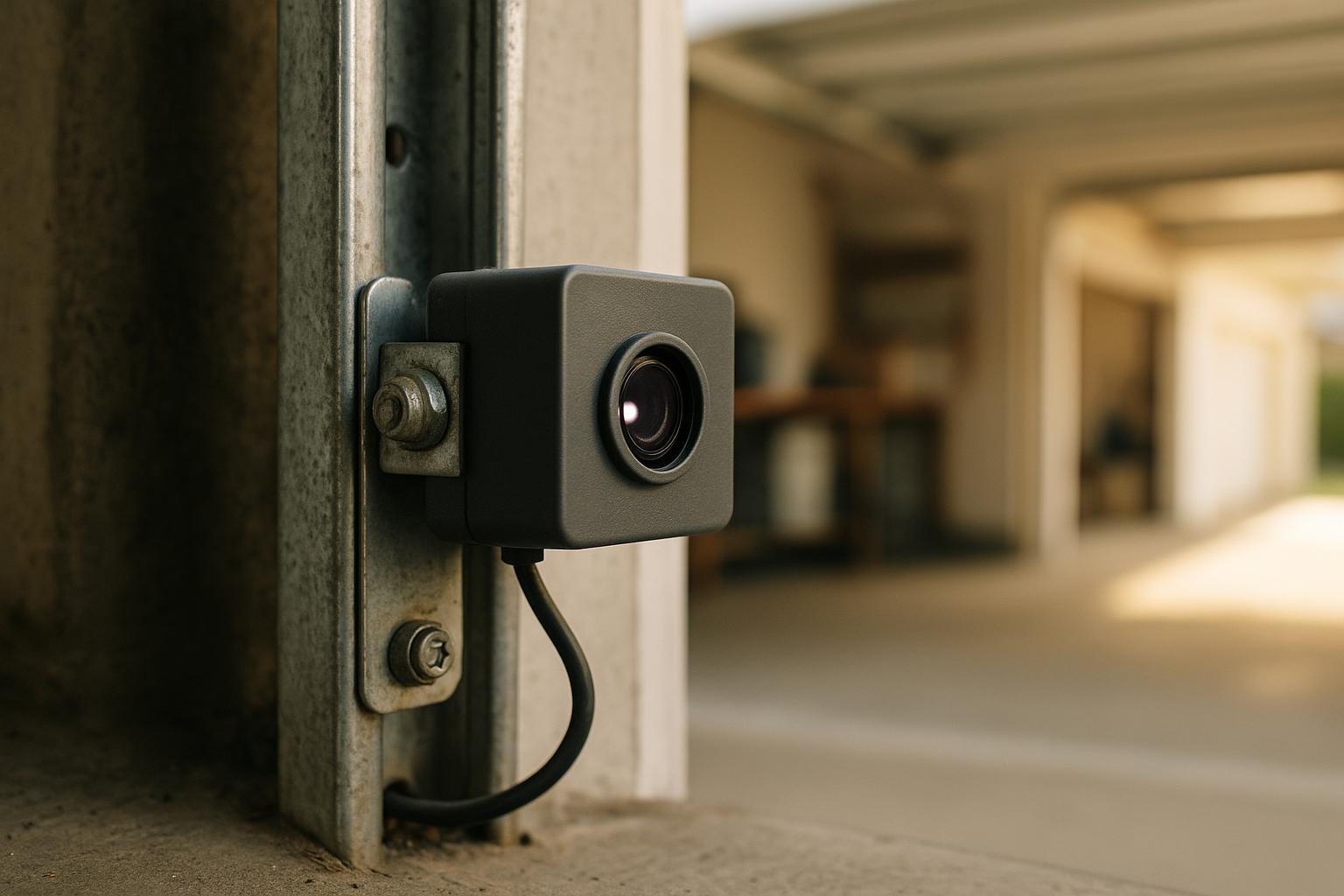
This is the number one cause of a garage door that reverses before reaching the floor. Those small sensors mounted about six inches off the ground on either side of your garage door opening are called photo-eye sensors. They project an invisible infrared beam across the doorway. If anything breaks that beam while the door is closing, the opener reverses the door immediately.
Here's what commonly goes wrong with photo-eye sensors:
- Misalignment: One or both sensors get bumped — by a bicycle, a lawnmower, a child, or even vibrations over time. When the sensors can't see each other, the opener interprets this as an obstruction.
- Dirty lenses: Living in Sarasota means dealing with humidity, pollen, dust, and the occasional gecko. A thin layer of grime on the sensor lens can weaken the beam enough to cause intermittent reversals.
- Sun interference: Direct sunlight hitting one of the sensors can overwhelm the infrared beam. This is especially common in west-facing garages during late afternoon hours.
- Damaged wiring: The thin wires running from the sensors to the opener unit can get nicked, corroded, or disconnected over time.
Before calling for service, try gently wiping both sensor lenses with a soft cloth and checking that the small LED lights on each sensor are steady (not blinking). A blinking light usually indicates misalignment or a wiring issue.
2. Incorrect Close-Force or Travel-Limit Settings
Your garage door opener has internal settings that control how far the door travels and how much force it applies during closing. If the travel limit is set too short, the opener thinks the door has hit something before it actually reaches the floor, and it reverses. If the close force is set too low, the opener gives up too easily when it encounters even normal resistance from weatherstripping or a slightly uneven floor.
These settings can drift over time, especially after a spring replacement, track adjustment, or even seasonal temperature changes that cause metal components to expand and contract. On most openers, the travel limit and force adjustments are small dials or screws on the back or side of the motor unit. However, adjusting them incorrectly can create new problems or compromise safety, so we generally recommend having a technician handle this calibration.
3. Worn or Broken Springs
Your garage door springs do the heavy lifting — literally. They counterbalance the weight of the door so the opener motor doesn't have to work as hard. When a spring is weakening, breaking, or already broken, the door becomes significantly heavier. The opener senses this extra resistance and reverses because it thinks something is blocking the door.
Signs that your springs may be the culprit include:
- The door feels noticeably heavy when you try to lift it manually
- The door closes unevenly or appears crooked
- You heard a loud bang from the garage (a telltale sign of a spring breaking)
- There's a visible gap in one of the torsion springs above the door
Important safety note: Garage door springs are under extreme tension. Never attempt to repair or replace them yourself. This is a job for trained professionals with the right tools and experience.
4. Track Obstructions or Damage
Sometimes the issue is mechanical. A small dent in the track, a loose bracket, accumulated debris, or rollers that have jumped out of the track can all create enough resistance to trigger a safety reversal. Inspect the tracks on both sides of the door visually. Look for anything that seems bent, blocked, or out of place.
5. Worn Rollers or Hinges
Over time, the nylon or steel rollers that guide your door along the tracks can wear out, crack, or seize up. Worn hinges can also cause binding. When these components create friction, the opener may interpret the resistance as an obstruction and reverse the door. If your door has become noticeably louder during operation, worn rollers are a likely contributor.
When to Try a DIY Fix vs. When to Call a Professional
Some of these issues are safe and simple to address on your own:
- Cleaning photo-eye sensor lenses
- Checking for obvious obstructions in the tracks or door path
- Making sure nothing is blocking the sensors
- Verifying that sensor indicator lights are steady
However, you should call a professional for:
- Spring replacement or adjustment
- Travel limit and force recalibration
- Track realignment or repair
- Wiring issues with sensors or the opener
- Any situation where the door is visibly crooked or making grinding noises
Attempting to fix mechanical or high-tension components without proper training can lead to serious injury or further damage to your garage door system.
How Preventive Maintenance Can Stop This Problem Before It Starts
Many of the issues that cause unexpected reversals are preventable with regular maintenance. At Precision Garage Door of Sarasota, our preventive maintenance service includes a full inspection and adjustment of springs, cables, rollers, tracks, sensors, and opener settings. We lubricate moving parts, tighten hardware, and identify wear before it turns into a breakdown.
Given the heat, humidity, and salt air that Sarasota homes endure year-round, annual maintenance is especially important here. Metal components corrode faster, lubricants break down sooner, and weatherstripping deteriorates more quickly in our climate.
Don't Ignore a Reversing Garage Door
It might be tempting to just leave the door open or manually pull it down, but a garage door that won't close properly compromises your home's security and exposes your garage to Florida's unpredictable weather. Whether it's a simple sensor cleaning or a spring that needs replacement, the fix is usually straightforward when handled by an experienced technician.
If your garage door keeps reversing and you can't resolve it with a quick sensor check, give us a call. Precision Garage Door of Sarasota provides same-day service throughout Sarasota, Bradenton, Lakewood Ranch, Venice, and surrounding communities. We'll diagnose the problem, explain your options honestly, and get your door working reliably again.